
Documentary - 6-part playlist by Donald MacIntyre. Check out his great blog!
Kosovo Liberation Organization or KLA, the Kosovo Muslim Albanian terrorist gangsters that lead violent separatism in the Serbian province, send a Muslim Hulji who was beheading Serbs, to sell the undercover Englishman Semtex explosive under the noses of NATO troops in Kosovo who are providing military protection to the Islamic separatists seeking to acquire this Serbian province for Islam then use it to wage a more effective violent Jihad against Europe in order to conquer it for Allah.
Snatched this post from Serbblog
Kosovo: Can You Imagine? is a documentary film by Canadian filmmaker Boris Malagurski, about the Serbs that live in Kosovo and the lack of human rights that they have today, in the 21st century. (Below is the teaser for the full documentary.)
Most of the Kosovo Serbs have been ethnically cleansed by the Albanians who make up the majority of Kosovo.
Kosovo has been under UN administration since 1999 when NATO bombed Serbia for 76 days to halt a crackdown on ethnic Albanian separatism in its province of Kosovo.
In the years following the war, thousands of Serbs were expelled from their homes, kidnapped and killed. Their houses, cultural and religious sites were burned and destroyed.
Kosovo for the Serbs is what Jerusalem is for the Jewish people. It is the cradle of their statehood, culture and religion. Most of the important Serbian Christian Orthodox monasteries are in Kosovo.
Today, Serbs still have a deep spiritual and traditional connection to Kosovo, a land which is being cleansed of everything Serbian.
About the Director
Born in Yugoslavia in 1988, Boris Malagurski has been a Canadian filmmaker since 2005 when he won the Best Student Film award at the International Student Film Festival in Toronto. His movie “The Canada Project” was shown on Belgrade Television, and many international film festivals around the world.
Mr. Malagurski’s visit to Kosovo has shocked him and his colleagues. In an interview, he said that he “can’t believe that this is happening in the heart of Europe in the 21st century. It’s the fact that most people only remember the words “war” and “Milosevic” when it comes to Kosovo that pushes them away from trying to find out what’s going on in Kosovo right now.
In an age where human rights are taken for granted in the Western world, Kosovo Serbs are battling for the most basic human rights. What makes it even worse is that Kosovo is administered by the international community and this is all happening under their nose. It’s horrible, I wonder if the politicians of the countries that have troops in Kosovo know how the international community is failing to secure a peaceful and honorable life for an ethnic group in the so called “multiethnic Kosovo”.
I hope that his film will encourage people to ask questions and do independent research on what’s going on in Kosovo, as well as try to change things for the better and help those that are helpless.”
Most of the Kosovo Serbs are internally displaced, some of them live in small container camps, in ghettos, all this in the heart of Europe in the 21st century.
We follow the stories of several Serbs who have fell victim to a nationalist and irredentist ideology that has a goal of creating a pure Albanian state of "Kosova" ("Kosovo" in Albanian)
Serbs in Kosovo have no basic human rights. You will be shocked to learn which atrocities they have to face each day.
Interview with the film maker
Interview with Vancouver movie director Boris Malagurski: “People have to liberate themselves from burdens of history”
Tuesday January 13th • Culture, Politics Category
I was always fascinated by independent media and the type of art that comes to life when artists have a vision, but not millions of budget dollars. I always believed that a part of the director is always hidden in his or her creation, and I made it a hobby to read (auto)biographies and see whether real life appears in art, and how much of his or her heart a director left in the project. This was my first time meeting the person behind the camera so I recently met up with Vancouver-based director Boris Malagurski, a Canadian-Serbian director and the mastermind behind his latest documentary, Kosovo|Can You Imagine?
For readers unfamiliar with the situation in Kosovo, it has historically been a very important part of Serbia, with strong cultural and religious symbolism. Until its very recent independence proclamation, Kosovo was an autonomous Serbian prKosovo|Can You Imagine?ovince bordering with Macedonia, Montenegro and Albania. The UN Security Council Resolution 1244 dated June 10, 1999 reaffirms “the commitment of all Member States to the sovereignty and territorial integrity of the Federal Republic of Yugoslavia [now two independent nations: Serbia and Montenegro] and the other States in the region[…]”. It has an Albanian ethnic majority, and by some it is considered Serbian holy land, because of a long history and many Christian Orthodox monasteries which are important to the Serbian national identity. In 1999, after obtaining information of Serbia’s human rights abuses in Kosovo, NATO bombed Belgrade for 78 days and since the end of the attack, Kosovo became UN-administered until its secession from Serbia in February 2008, with recognition from 53 out of 192 UN-recognized states to date.
Malagurski’s movie focuses on the humanitarian crisis in Kosovo and documents the struggles of the very few remaining Serbs in Kosovo. Malagurski’s movie presents a side of the human crisis, which is seldom shown in the Western media. I asked him a few questions, hoping to get a better understanding of his latest creation and the silently continuing issue.
Why did you choose to make a movie about Kosovo?
Malagurski: I believe that this is a very important current event which is unfortunately inadequately covered from a human rights perspective. I have been following the situation in Kosovo and Metohija for quite a while, and when the provisional government declared independence, I felt that I had to investigate whether all the inhabitants of Kosovo and Metohija had the same rights, as it is said in many UN reports. Although I expected Western sources to differ from reality, I never expected to find people living in ghettos in the 21st century in Europe just because some people [Serbs, Roma, others] do not belong to the majority ethnic group [Albanians].
What is the responsibility of the international community regarding the humanitarian crisis in Kosovo and what is the role of your film in this?
Malagurski: The situation is similar to a dog chasing a car. Once the dog reaches the car, it doesn’t know what to do with it. After a massive anti-Yugoslavian campaign and the bombing of its citizens to take control over Kosovo and Metohija, the international community was not prepared for the consequences or to deal with the chaos in the province. Security forces were given unrealistic and absurd protection limitations, and non-Albanians were evacuated because there was no authorization to protect them and their properties. From a historical perspective, the collective responsibility for the problems in Kosovo rests with everyone partially. The unpreparedness of the international community to discard failed strategies and to encourage non-Albanian minorities to return to their homes and protect them from harm really surprises me.
My movie has the role of a shock-therapy session. We all know that everything we see on the mainstream news channels passes through many filters before we actually see it. My movie has not been subjected to any filters. It is a realistic depiction of the reality in Kosovo, and it is meant for those who are not familiar with the situation, or those who have understood it improperly, regardless of whether it was because of misinformation caused by the media or simple disinterest. The movie is also not a political film. Those who yearn to characterize the Kosovo situation as a political matter are going to be disappointed after watching the film since it focuses on human rights.
What is the role of the artist and/or the director when bringing a message to the audience?
Malagurski: The main responsibility is the credibility and reliability of information covered in the film. The stories and facts in this movie are entirely true, but because of those who try to discredit any information from a Serbian national by accusing him or her of spreading propaganda, I have interviewed some respected Canadians such as Retired Major General Lewis MacKenzie, James Bissett (the former Canadian Ambassador to Yugoslavia), and Michel Chossudovsky (Canadian economist and economics Professor at the University of Ottawa). Furthermore, the role of a director is to use actual facts to form convincing arguments. After watching this movie, there shouldn’t be anyone who can say that human rights abuses in Kosovo aren’t a reality. I also feel that I have a duty to present the facts and arguments in a creative and contemporary manner.
Can progressive media help reconcile Serbs and Albanians; is there a mutually beneficial solution to this problem?
Malagurski: As with all other peoples in the Balkans, external powers influenced and impacted Serbs and Albanians. People must liberate themselves from the weight of history and accept that we are essentially the same, that we should celebrate our differences, and not go to war because of them. Canada, for instance, teaches these principles to its people. The peoples of the Balkans could learn a lot from the Canadian example where a large number of ethnic groups live in peace and prosperity. Progressive media is a good start for ending ethnic conflicts in Kosovo and Metohija. People need to accept that there is no alternative to living together and that local politicians, who are under pressure from outside forces, are not interested in peace and prosperity but in tension and conflict, which keeps them in power. Jimmy Hendrix once said: “when the power of love overcomes the love of power, the world will know peace.”
Regardless of which side you are supporting, Malagurski’s movie offers a different perspective that is virtually unknown to most Canadians. For the trailer, questions and more information, visit the official site, www.kosovo-film.com.
truthtube in 5 parts
Part II
Part III
Embedding disabled by request ... the filnm can be watchjed at the playlist page here
http://www.youtube.com/view_play_list?p=1BADBDE109373081
Documentary about how Albanians form Brooklyn New York are smuggling weapons form the USA to Kosovo via Albania. It also shows that former Clinton administration officials such as Richard Holbrooke and former presidential candidate / NATO supreme commander General Wesley Clark, support The KLA an independence of Kosovo The Documentary has Dutch Subtittles, languages spoken are: English (90 %) Albanian (5%) and Dutch (5%
Watch la guerra infinita 01 - kosovo.avi in Educational & How-To | View More Free Videos Online at Veoh.com
http://www.veoh.com/browse/videos/category/educational_and_howto/watch/v18463054KCTZTrPX
After nine years of International Community's presence in Kosovo the situation does not at all look bright to Riccado Iacona, a RAI TRE journalist, who interviews both Serbs and Albanians about the crimes of the KLA (Kosovo Liberation Army).
Watch It Began With a Lie.mp4 in Educational & How-To | View More Free Videos Online at Veoh.com
http://www.veoh.com/browse/videos/category/educational_and_howto/watch/v18299239jaGZS9Tj
NATO deception of the european public and Islamic taqiyya by KLA led to failed international policy in kosovo. In effect victimising the native serbs and helping the saudi-backed albanian muslim separatists. Currently specialising in church desecration, kidnapping, organ harvesting, sex-slavery and drug trafficking.
An absolute moral and humanitarian disaster caused by the ignorant clinton administration obsessed with the thought of some kind of "action" apart from wet "lewinsky-cigars" and impeachment procedures.
http://www.youtube.com/watch?v=aeEE4uzWgPA
http://www.youtube.com/watch?v=UlYuTpos6AQ
BBC 090409 - The Kosovo Liberation Army (KLA, UCK, OVK) abducted civilians in Kosovo who were then mistreated and in some cases killed, a BBC investigation has found. Kosovo Serbs, ethnic Albanians and Roma were among an estimated 2000 who went missing, both during and after the war in Kosovo.
BBC's 'Crossing Continents' uncovers disturbing evidence of atrocities by the Kosovo Liberation Army (KLA) during and after the Kosovo War ten years ago. The headlines about the war have consistently focused on Serb war crimes against ethnic Albanians. However, after a five-year investigation, Crossing Continents can now reveal another side to the conflict which the world was not meant to see. Using documents and recorded interviews he has been gathering since 2004, reporter Michael Montgomery reveals what happened after the Nato bombing stopped and the Kosovar refugees began returning to their homes. Little has so far been established of the hundreds of Serbs and other non-Albanians who remain unaccounted for after the war. Through painstaking examination of the evidence, Michael shows for the first time how some of them met their death and where their remains could be buried. It is a story of abduction and murder, but this time most of the victims are Serbs, and the alleged perpetrators Albanian, members of the KLA. He examines how it was that many of these kidnaps and murders took place under the noses of Nato and the United Nations, who were already in Kosovo when the abductions took place.
Michael travels to Western Kosovo, and from there over the border into Albania, following the route along which it is said hundreds of kidnapped men and women were taken to die. He journeys into Northern Albania, where it is believed that Serbs and others were held at secret camps, and where they were tortured and, in many cases killed. But some might say those killed within the secret camps were the lucky ones. In the countryside a few kilometres outside the town of Burrel there is a house where in 2004 a UN forensic science team conducted a search. Michael was one of only two journalists allowed to be present during the two-day operation. The aim of the search was to seek evidence to support claims that the KLA took several dozen hostages there to have their vital organs removed for sale before they died. According to documents seen by Crossing Continents, the findings of the forensic experts were of significant interest. That view is supported in the programme in an exclusive interview with the UN's former top forensic scientist in Kosovo, who took part in the examination of the house. He supports the allegation that material from the investigation was destroyed by the UN War Crimes Tribunal.
veoh HQ download
Watch Kosovo_war_crimes.mp4 in Educational & How-To | View More Free Videos Online at Veoh.com
http://video.google.com/videoplay?docid=2635252351166213913
A unique archive of destroyed Orthodox churches, monasteries and sacred sites in Kosovo-Metohija in the period between 1998 and 2005 by ethnic Albanian terorists. Many of these video recordings are the only video document currently available to the media.
http://www.dailymotion.com/video/x4b10h_kosovo-kidnapped-and-murdered-12-ap_politics
Part 2
http://www.dailymotion.com/video/x4b0w1_kosovo-kidnapped-and-murdered-22-ap_politics
Documentary film by RTS journalist Svetlana Vukmirovic
The uncertainty, suffering and pain in the hearts of families of kidnapped Serbs in Kosovo-Metohija. The kidnapping of Serbs in the southern Serbian province began as early as 1998. Remains of bodies of killed Serbs who were kidnapped in 1998 and 1999 in Orahovac, Prizren, Gnjilane and other areas in Kosovo-Metohija are regularly handed over at the administrative border-crossing Merdare.
stolen kosovo from krukke on Vimeo.
Permalink: http://www.veoh.com/videos/v17057128xfkMHjz2
French subs: http://video.google.com/videoplay?docid=1070026862343335835
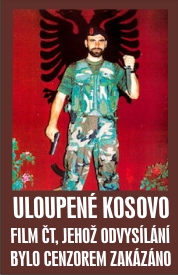
Czech Documentary "Stolen Kosovo" by Vaclav Dvorak with English Captioning
Czech documentary "Stolen Kosovo", which has been censored in Czech Republic after Foreign Minister Karel Schwarzenberg unilaterally declared independence of Serbian Kosovo and Metohija province by the Pristina separatists, is now also available with English captioning.
There are many versions around but to my knowledge the one on veoh is the complete directors cut. There is also one on google video with has cut out the intro. See below
Someone very bright and hard working has done a great job, and we owe them sincere gratitude.

Update: Milosevic discusses muslim separatism. Thanks to Vladtepesblog
Watch Yugoslawia1.avi in Activism Videos | View More Free Videos Online at Veoh.com
Permalink:http://www.veoh.com/videos/v16636786cCkcWms3
Part 2
Watch Yugoslawia2.avi in Activism Videos | View More Free Videos Online at Veoh.com
Permalink: http://www.veoh.com/videos/v16636787Sb7arAm8
If anyone doubts that it is time for a clear and critical look at Western intervention in the Balkans, consider this: The forces that the US supported in Bosnia and Kosovo were and are closely allied with Osama Bin Laden's al-Qaeda network. Bin Laden, himself, was a regular visitor in the office of Bosnia's President Alija Izetbegovic in early 1993, when the US government was touting his commitment to moderation and multi-ethnic cooperation.
`Yugoslavia: The Avoidable War makes a compelling case that Western backing of separatist forces led directly to the outbreak of war. `The intelligence agencies were unanimous in stating that if you recognize Bosnia, it will blow up, George Kenney of the State Department reveals. Why then did the US proceed to do so sparking four years of savage warfare? How did we end up on the same side as Osama-Bin Laden in Bosnia and Kosovo? Newscasters and columnists continue to refer to Kosovo as a victory for the US, but this documentary shows that the region is infinitely more divided and dangerous than it was when NATO bombing commenced in March of 1999. The region is more unstable and US troops are likely to be stuck in harm's way much longer than originally anticipated.
Could the violent break up of Yugoslavia have been avoided? What role did Western intervention play in the tragedy that consumed the multi-ethnic country? "Yugoslavia - The Avoidable War," a 2h 45 min minute film, addresses these questions in a well documented, powerful indictment of misguided intervention in the region. The documentary which took four years to produce, and which was updated following NATO intervention in Kosovo, investigates how serious errors and misjudgements made by Western powers particularly Germany and the United States helped spark the violent break up of the former Yugoslavia in 1991 and continue to destabilize the region in the new millennium.
"Yugoslavia the Avoidable War" documents the role of Western Intelligence agencies in providing aid to armed separatists and reveals how Western governments supported different sides in an ethnic conflict while portraying themselves as peacemakers. Most compelling are the candid statements of the decision-makers themselves, including former EC Mediator Lord Peter Carrington, former US Secretaries of State James Baker and Lawrence Eagleburger, as well as Germany's former foreign minister, Hans Dietrich Genscher."What the international community(the Europeans), the Americans and UN did, made it sure there was going to be conflict," states Lord Peter Carrington, the EC mediator, who along with UN envoy Cyrus Vance warned against diplomatic recognition of separatists states such as Croatia and Bosnia, before a political settlement could be achieved. "US intelligence agencies were unanimous in saying that if we recognize Bosnia it will blow up," says former State Department official George Kenney. Yet, according to former acting US Secretary of State Lawrence Eagleburger, domestic political considerations- the 1992 election campaign between William Clinton and George Bush? led to the tragic decision to recognize Bosnia without a political settlement between the Muslims, Serbs and Croats.
The film makes a powerful argument that the US drew the wrong lesson of from the Bosnian conflict to justify intervention in the civil war that simmered in Kosovo. The manipulation of news coverage by the warring sides is explored in compelling footage and in interviews with veteran journalists such as David Binder of the New York Times and John MacArthur, columnist and publisher of Harper's Magazine, as well as authors Susan Woodward and Ted Galen Carpenter. The documentary offers powerful evidence of US involvement in "Operation Storm" the Croatian army's violent expulsion of the ethnic Serbian minority in 1995, an action which offered an eerie parallel with the expulsion of Albanian refugees in Kosovo by Serbian forces following NATO intervention on the side of the Kosovo Liberation Army (KLA).
Compelling, candid interviews from military officers including UN Commanders Sir Michael Rose, Lewis MacKenzie and former Pentagon Chief of Staff General Colin Powell elucidate how Western policymakers blundered by taking sides and by relying on military means to settle political problems. Co-producers of "Yugoslavia: The Avoidable War" are George Bogdanich New York based documentary film maker and Martin Lettmayer a German television producer based in Munich, who is currently working on a documentary in Central America. An earlier version of the film, completed prior to the Conclusion of NATO's intervention against Kosovo, was named the "Best Social Documentary" by the New York International Independent Film and Video Festival in September of 1999. In April, the LA Weekly called the film "truly accomplished," adding: "The numerous Strategic missteps by the West and the endless political doublespeak Are carefully detailed. The tragedy of the situation seems to multiply Before your eyes as the film clearly proves that so much of the Bloodshed could have easily been prevented."